

Do Nasal Strips Actually Work? The Science Explained
How a small plastic strip can change the way you breathe, and what 30 years of research actually shows about sleep, snoring, sport, and your brain.
A piece of curved plastic with adhesive on the back. That's technically what a nasal strip is. And yet they show up on the noses of NFL quarterbacks, marathon runners, and millions of people who simply want to sleep better. The question most people never ask: what does a strip actually do to your nose physically, and what evidence is there that it really works?
This is the full picture. No exaggerated claims. Just what the research says, and where it stops.
What a nasal strip actually is
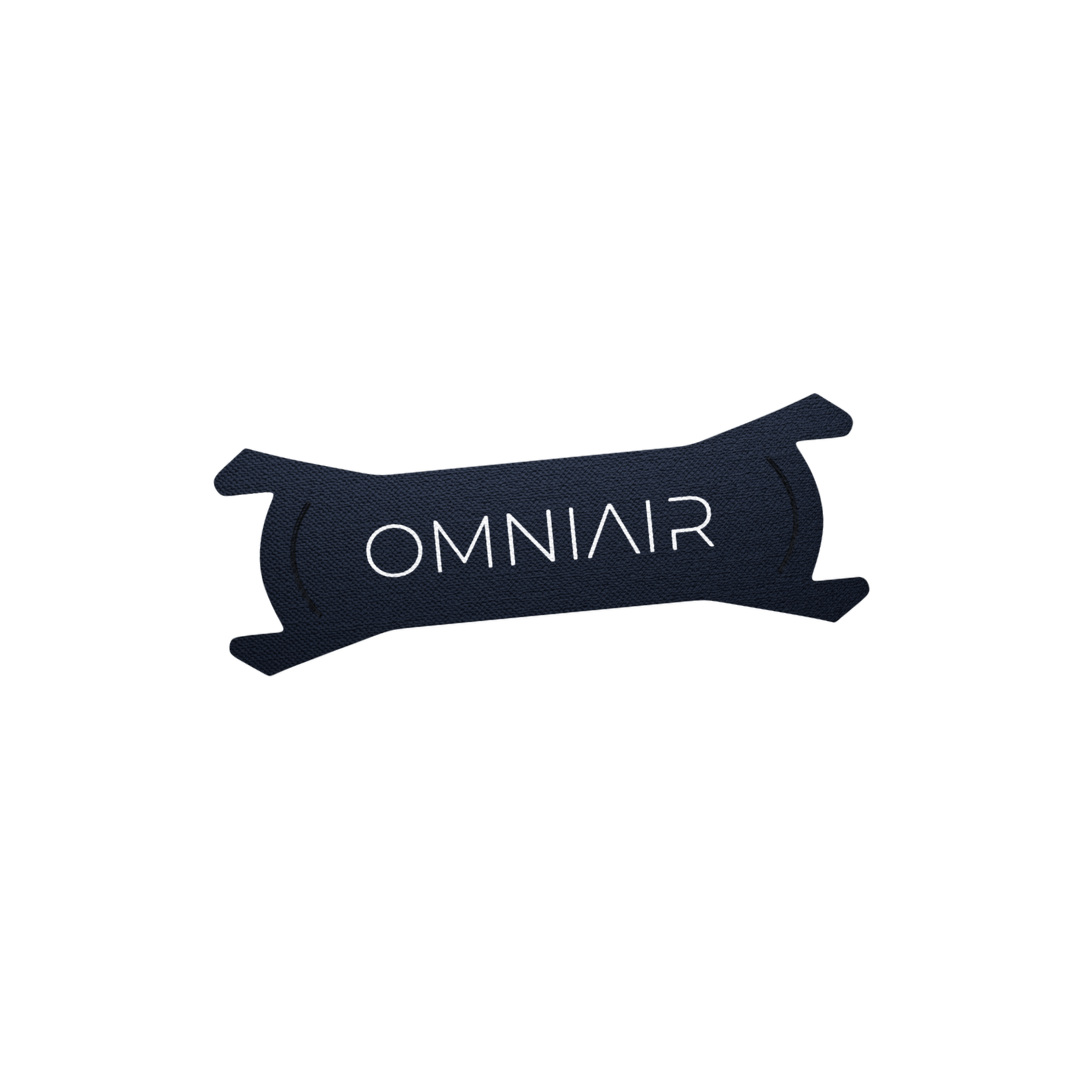
The technical term is external nasal dilator (END). It's a flexible strip with adhesive on the bottom and two or three springy plastic bands embedded on the inside. Stick it to the right spot on your nose and the strip tries to return to its flat shape. That force pulls on your skin, which in turn pulls on the soft tissues of your nostrils.
External nasal dilators have been studied in medical research since the early 1990s. The concept itself is much older. Before the modern adhesive strip there were metal clips, braces, and internal dilators. The mechanism is the same across all those variants: physically widening the nasal passage so you can breathe through your nose more easily.
And nasal breathing, as a growing stack of research shows, does a lot more than just move air around.
The nasal valve, the real bottleneck
The narrowest point in your entire airway isn't deep in your throat or in your lungs. It sits about one centimeter inside your nostril. This area is called the nasal valve. According to a 2014 review in the International Journal of General Medicine, this nasal valve is responsible for roughly 50 to 60 percent of the total resistance in your entire airway.
That's a striking number. One small spot, just a few millimeters wide, determines whether breathing feels easy or not. And it gets even more interesting when you know that small changes in that area have a disproportionately large impact on airflow, according to Poiseuille's law. A few millimeters wider means significantly less resistance.
A nasal strip targets exactly that spot. The spring tension in the plastic bands pulls the soft tissues around the nasal valve outward and stabilizes them, preventing them from collapsing inward during strong inhalation.
What the measurements show
In a widely-cited 1998 study by Roithmann, Chapnik and Cole in The Laryngoscope, acoustic rhinometry was used to measure what an external nasal dilator actually does in people with nasal obstruction. The conclusion: the strip significantly increased the minimum cross-sectional area of the nasal valve and reduced measured resistance.
A few years later, in 2000, Kirkness, Wheatley and Amis in the European Respiratory Journal captured the same phenomenon a different way: the dilator stabilizes the lateral nasal wall and prevents it from collapsing during the final phase of inhalation.
So the physiology is well-established: a nasal strip measurably widens the nasal passage and keeps it stable. The more interesting question is what that actually delivers to your body. For that, we need to look at the broader science of nasal breathing.
Why breathing through your nose does more than you'd think
A 2026 narrative review by Amirsadri and Sedighi, published in Behavioral Sciences, synthesized around 70 studies on the physiological and neurological effects of nasal breathing. The conclusion was striking: the nose does much more than just filter and humidify. It influences your immune system, your autonomic nervous system, and even how your brain processes information.
Three mechanisms stood out.
Nitric oxide, the molecule only your nose makes
Your sinuses continuously produce nitric oxide (NO), a gas with antimicrobial and vasodilatory properties. According to the Amirsadri review, concentrations in the sinuses can reach up to 30,000 parts per billion. For perspective: at 100 ppb, certain microorganisms are already neutralized. Research suggests this gas forms one of the first lines of defense against pathogens you inhale.
In a clinical study by Lundberg and colleagues in 1996, intubated patients had their own nasal NO returned to them through their ventilator. The result: an 18 percent increase in pulmonary arterial oxygenation. In healthy participants, nasal breathing led to 10 percent higher transcutaneous oxygen levels compared with oral breathing.
When you breathe through your mouth, you largely bypass the entire NO system. When you breathe through your nose, you get a built-in gas delivery system that simultaneously supports your lungs and helps protect your airways.
The autonomic nervous system: rest or stress
Your autonomic nervous system has two modes. Sympathetic (fight or flight) and parasympathetic (rest and recovery). Most modern people sit in mode one too much of the time.
According to a 2018 systematic review by Zaccaro and colleagues in Frontiers in Human Neuroscience, slow nasal breathing increases parasympathetic tone and improves heart rate variability (HRV), a marker for recovery capacity. The effect appears to operate through stimulation of the vagus nerve and mechanoreceptors in the nasal cavity.
The Amirsadri review adds that structural abnormalities which disrupt normal nasal airflow, like a deviated septum, are associated with sleep problems, reduced quality of life, and higher levels of irritability, anxiety, and low mood. When airflow is surgically restored, those symptoms often improve alongside it.
Translated: the easier you can breathe through your nose, the more access your body has to recovery mode.
Your brain listens to your breathing
Perhaps the most striking part of recent research: nasal breathing synchronizes rhythmic activity in your brain. A landmark 2016 study by Zelano and colleagues in the Journal of Neuroscience used intracranial recordings in epilepsy patients and showed that nasal breathing drives oscillations in the piriform cortex, amygdala, and hippocampus, three core regions for emotion and memory.
The effect sits mainly in the inhalation, and it disappears during mouth breathing. In a follow-up study from 2019 by Perl and colleagues, participants spontaneously initiated cognitive tasks during nasal inhalation, and their visuospatial performance was better in those moments.
It sounds almost too remarkable to be true, but the data is robust. Research suggests your brain literally processes information differently depending on whether you're breathing through your nose or your mouth.
What the research on nasal strips themselves shows
Back to the strip. Now that we know why nasal breathing is valuable, what does the little device that makes that breathing easier actually deliver?
1. Snoring and sleep quality
Snoring happens when air has to pass through a narrowed airway and causes vibrations in soft tissues in the throat. The logic behind nasal strips for snoring: less resistance in the nose means less negative pressure further down, and less negative pressure means less vibration.
In practice, the evidence is mixed, and it's important to be honest about that. A 2016 systematic review and meta-analysis by Camacho and colleagues pooled 14 studies on nasal dilators in obstructive sleep apnea. The conclusion was sober: in adults with OSA, external nasal strips did not significantly reduce the apnea-hypopnea index. So for the specific condition of sleep apnea, a nasal strip is not a solution. Which is why we don't make that claim.
For chronic nasal congestion and sleep problems without OSA, it's a different story. A randomized double-blind 2018 study by Wheatley and colleagues followed 59 participants with chronic nasal congestion over two weeks of nightly use. Nasal strips showed significantly better scores on sleep satisfaction (measured with the Pittsburgh Insomnia Rating Scale) compared with placebo.
An earlier clinical study by Todorova and colleagues in 1998 in the European Journal of Medical Research looked specifically at the effect on snoring in ordinary snorers, and found significant improvements compared with placebo.
Research suggests that many users snore less and sleep better when their issue stems from nasal congestion or nasal valve restriction. For people whose root cause sits further down the airway (soft palate, OSA, weight-related), it doesn't apply. Honest version.
2. Sport and breathing
At high intensity, most people automatically switch to mouth breathing. The reason is simple: nasal resistance feels too high, and the mouth is physically a wider opening. But there's a downside to mouth breathing that many athletes overlook: you lose the NO system, you lose the filtering, and you lose part of the signaling to your autonomic nervous system.
A 2018 study by Dallam and colleagues in the International Journal of Kinesiology and Sports Science investigated recreational runners who had previously trained themselves to breathe only through their nose during training. The results were notable. At maximum effort, there was no significant difference in VO2max or time to exhaustion between nasal and oral breathing. But ventilatory efficiency (VE/VO2) was significantly better during nasal breathing: the runners used less air for the same oxygen uptake.
Translated: at equal performance, the respiratory system did less work. For long-distance sports where breathing efficiency adds up over time, that matters.
A nasal strip doesn't help with your VO2max, but it makes nasal breathing physically feasible at higher intensity by reducing resistance at the nasal valve. That's why you see them on runners, cyclists, and NFL players. Not to be faster, but to stay breathing through the nose while the body is under load.
3. Chronic congestion and being awake
Beyond sleep and sport there's a third application that gets less attention: simply breathing better during the day when your nose is partially blocked for any reason. A cold, allergies, a mild septal deviation, cold weather.
The Roithmann study above included patients with all kinds of nasal obstruction and showed that the strip improved measured airflow across all those situations. According to the 2014 review, this is one of the most practical applications: a non-invasive, painless, affordable way to temporarily support the nasal passage when you need it.
It doesn't work for everyone. People with severe structural issues or chronic turbinate hypertrophy may need a medical solution. But for the broad middle ground of mild to moderate congestion, research suggests a measurable effect.
What nasal strips are not
This part matters. The internet is full of exaggerated claims, and they don't help anyone.
- It is not a treatment for sleep apnea. Severe snoring and pauses in breathing during sleep can point to OSA, a medical condition that needs evaluation by a doctor. A strip does not replace CPAP or medical examination.
- It does not fix structural nasal problems. With a severely deviated septum or enlarged turbinates, a strip has limited effect. An ENT specialist is the right route there.
- It does not make you faster or stronger. What it does is make nasal breathing physically easier. What you do with that depends on training and breathing technique.
- It does not work for everyone. If your root cause of poor sleep or difficult breathing sits further down your airway, you won't feel a difference. That's normal and scientifically explainable.
How OMNIAIR thinks about it
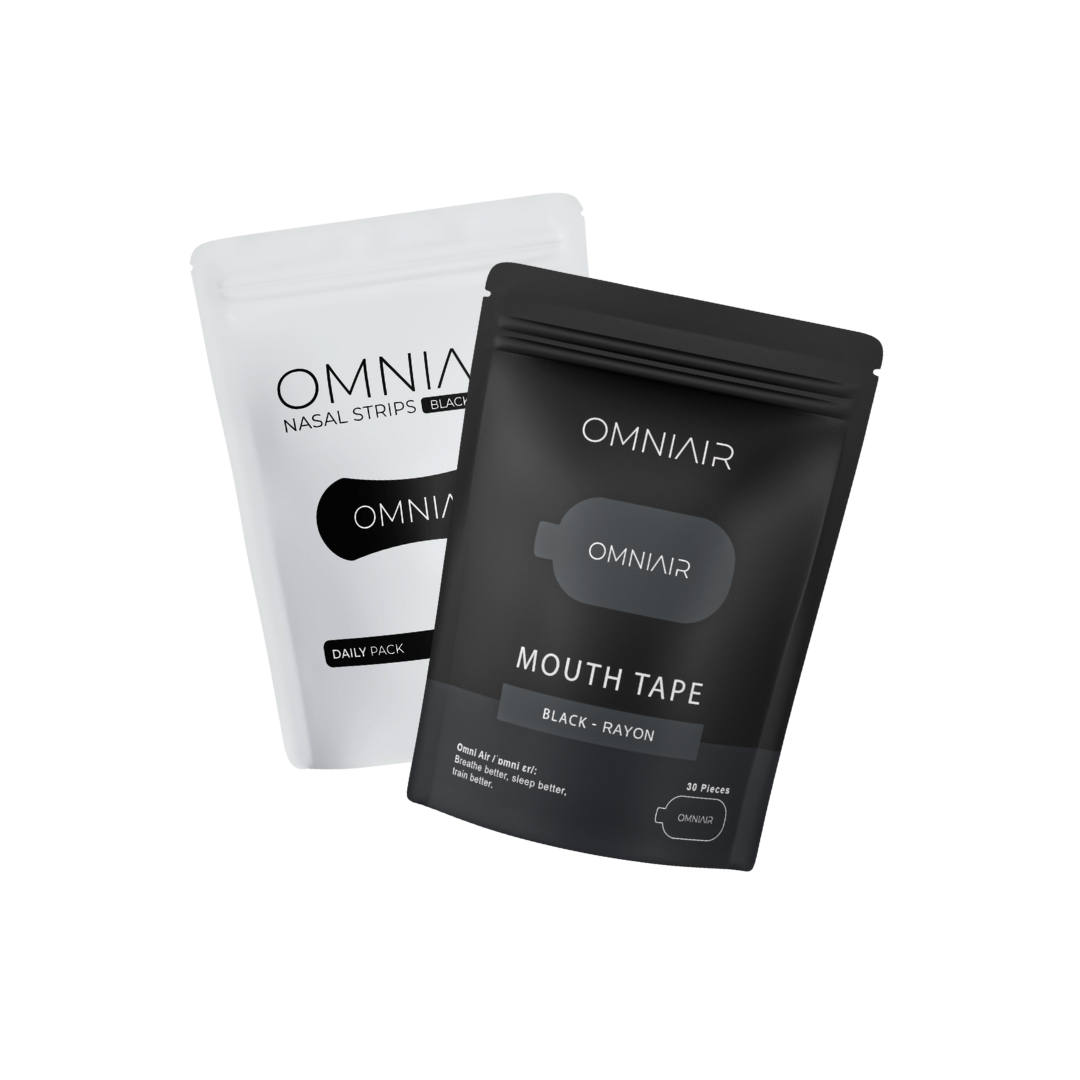
OMNIAIR started with nasal strips and mouth tape, because breathing is the foundation. Breathing badly at night makes every other recovery practice less effective. Breathing well during the day has a direct line to energy, focus, and athletic performance. And as the broader research shows: nasal breathing influences your immune system, your stress response, and how your brain processes. Not just your lungs.
The world is saturated with content about pushing harder. Train more, work later, sleep less. The data, and the experience of every athlete operating at the top of their game, points in the other direction. Recovery is where the actual progress happens. And recovery starts with breathing.
Our Daily nasal strips and Sport nasal strips use the same fundamental mechanism studied in all the research referenced above: a springy external dilator that stabilizes the nasal valve. We don't present them as a miracle. We present them as what they are: a simple, mechanical support for nasal breathing, grounded in a clear anatomical principle and a growing stack of science.
How to use a nasal strip
- Placement: directly above your nostrils, about one centimeter above the nostril opening. Too high and the strip won't pull at the right spot.
- Clean skin: clean your nose first, without oil or greasy cream. Adhesive bonds poorly with oil.
- Size: choose a strip that fits your nose width. Too narrow and the leverage is too small. Too wide and the strip peels off.
- When to use: at night before sleep, during long endurance training, or during the day with a cold or allergies.
- What to expect: immediate effect on placement. No buildup required like with red light therapy. Doesn't work after a few nights? Then your restriction sits elsewhere in your airway.
The short version
A nasal strip is a simple mechanical tool. It pulls the nasal valve slightly wider and stabilizes it, reducing resistance at the narrowest point of your airway.
The evidence is clear on the physiology: measurement shows that the strip does what it promises. The broader science of nasal breathing shows why that's worth the effort: more nitric oxide for your lungs and immune system, better parasympathetic balance for recovery, and even influence on how your brain synchronizes oscillations.
The practical impact varies by person and situation. Research suggests improvement for chronic nasal congestion and related sleep problems, and for snoring that stems from nasal restriction. For medical conditions like OSA, a strip is not a solution. For athletes who want to keep breathing through the nose during exertion, it makes that technique physically more accessible.
It is not a miracle. It is a tool, with a clear mechanism and decades of research behind it.
Better breathing is the starting point.
Disclaimer: OMNIAIR products are not medical devices and are not intended to diagnose, treat, cure or prevent any medical condition. If you have a medical condition or health concern, consult a qualified healthcare professional.
Sources
- Dinardi, R.R., et al. (2014). External nasal dilators: definition, background, and current uses. International Journal of General Medicine, 7, 491 to 504. https://pmc.ncbi.nlm.nih.gov/articles/PMC4234285/
- Roithmann, R., Chapnik, J., Cole, P., et al. (1998). Role of the external nasal dilator in the management of nasal obstruction. The Laryngoscope, 108(5), 712 to 715. https://pubmed.ncbi.nlm.nih.gov/9628502/
- Kirkness, J.P., Wheatley, J.R., Amis, T.C. (2000). Nasal airflow dynamics: mechanisms and responses associated with an external nasal dilator strip. European Respiratory Journal, 15(5), 929 to 936. https://erj.ersjournals.com/content/15/5/929
- Camacho, M., et al. (2016). Nasal Dilators (Breathe Right Strips and NoZovent) for Snoring and OSA: A Systematic Review and Meta-Analysis. Pulmonary Medicine, 4841310. https://pmc.ncbi.nlm.nih.gov/articles/PMC5187471/
- Wheatley, J.R., Amis, T.C., et al. (2019). Effects of nasal dilator strips on subjective measures of sleep in subjects with chronic nocturnal nasal congestion: a randomized, placebo-controlled trial. Allergy, Asthma & Clinical Immunology. https://pmc.ncbi.nlm.nih.gov/articles/PMC6109978/
- Todorova, A., Schellenberg, R., Hofmann, H.C., Dimpfel, W. (1998). Effect of the external nasal dilator Breathe Right on snoring. European Journal of Medical Research, 3(8), 367 to 379. https://pubmed.ncbi.nlm.nih.gov/9707518/
- Dallam, G.M., McClaran, S.R., Cox, D.G., Foust, C.P. (2018). Effect of Nasal Versus Oral Breathing on VO2max and Physiological Economy in Recreational Runners. International Journal of Kinesiology and Sports Science, 6(2), 22 to 29. https://journals.aiac.org.au/index.php/IJKSS/article/view/4400
- Amirsadri, A., Sedighi, H. (2026). Know Your Nose: A Narrative Review of the Developmental and Functional Impact and Importance of the Nose, Nasal Breathing and Techniques on Health and Emotional Wellbeing. Behavioral Sciences, 16(3), 467. https://doi.org/10.3390/bs16030467
- Zaccaro, A., et al. (2018). How Breath-Control Can Change Your Life: A Systematic Review on Psycho-Physiological Correlates of Slow Breathing. Frontiers in Human Neuroscience, 12, 353. https://doi.org/10.3389/fnhum.2018.00353
- Zelano, C., et al. (2016). Nasal Respiration Entrains Human Limbic Oscillations and Modulates Cognitive Function. Journal of Neuroscience, 36(49), 12448 to 12467. https://www.jneurosci.org/content/36/49/12448
Ready to upgrade your recovery?
Science-backed tools, built for athletes who take recovery seriously.
Shop OMNIAIR