

Nasal Strips for Running: What the Science Says About Marathon and Trail Performance
The marathon is a respiratory event disguised as a leg event. Trail running is even more so. Here's what 30 years of peer-reviewed research actually says about nasal breathing for runners, and where a small adhesive strip genuinely fits into the equation.
Most runners obsess over the wrong variables. Carbon plate stack height. Caffeine timing. Sodium per hour. All useful. But the system that runs continuously from the first kilometre to the last is rarely optimised: the way you actually move air through your body.
"Nasal strips for running" is a steadily growing search term as the running community wakes up to breathing optimisation. The question this blog answers: does the research actually support nasal strips for marathon and trail running, or is it just another piece of gear with marketing behind it?
This is the honest version. What the science says. Where it stops. And where nasal strips genuinely fit into a runner's training and race-day strategy.
Why running is a respiratory event
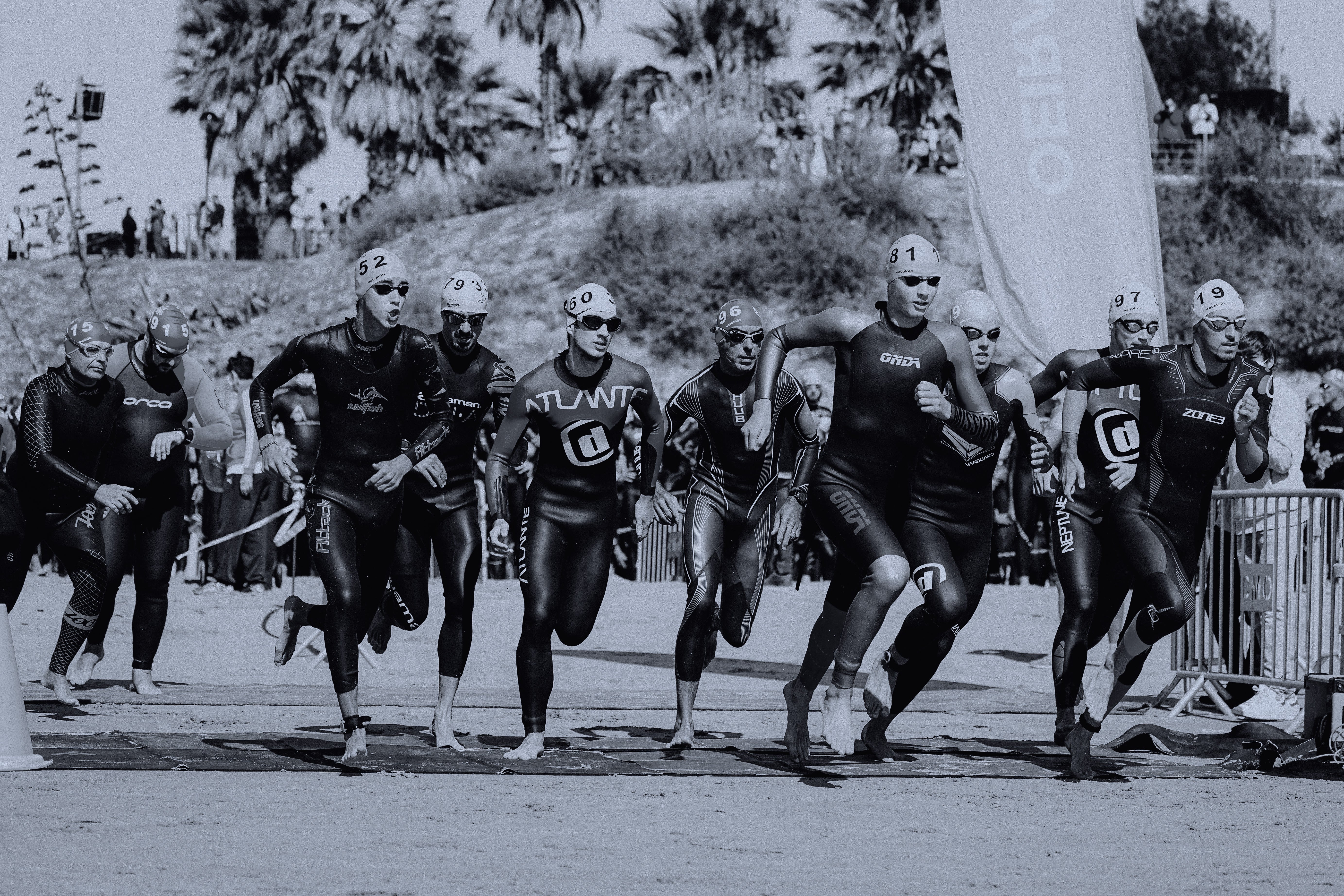
A marathon is 2 to 5 hours of sustained submaximal output. Trail and ultra races stretch that to 6, 10, sometimes 24 hours. For age-group runners, most of that time is spent at 70 to 85% of maximum heart rate, the aerobic zone where breathing efficiency determines how long you can hold pace.
Here's the problem most runners don't see coming. A 2008 study by Romer and Polkey in the Journal of Applied Physiology demonstrated that prolonged exercise causes measurable respiratory muscle fatigue. That fatigue then triggers a reflex (the respiratory muscle metaboreflex) that actively reduces blood flow to the legs. In plain terms: tired breathing muscles steal blood from your running muscles.
For a marathon runner at kilometre 32, this is the moment the wheels come off. Not glycogen depletion. Not dehydration. Respiratory fatigue, cascading into leg fatigue, cascading into the wall.
What most runners don't realise: the nose, not the lungs, is often the bottleneck. About 50 to 60% of total airway resistance sits in the nasal valve, a small zone just inside the nostrils. When you push hard or get even slightly congested from pollen, dry air, or cold, the soft tissues around that valve collapse inward. Your body shifts to mouth breathing earlier than it needs to. Hours of mouth breathing accelerates respiratory muscle fatigue, dries the airways, and disrupts the autonomic balance that long-duration running depends on.
The research that matters for runners
Forget the marketing claims. "40% more airflow" appears in no peer-reviewed study. Here's what the actual science shows for endurance-pace running.
A 2017 study by LaComb and colleagues in the International Journal of Kinesiology and Sports Science had trained runners complete treadmill runs at 50%, 65%, and 80% of VO2max under nasal-only and oral-only breathing. At 65% and 80% (the zones most runners race in), nasal breathing was significantly more efficient than oral breathing. Same oxygen delivery, less respiratory work.
Even more directly relevant: a 2018 study by Dallam and colleagues tested recreational runners specifically trained in nasal breathing. The finding: at submaximal intensities, nasal breathing delivered equivalent VO2max output with significantly better ventilatory efficiency. The runners used less air for the same oxygen uptake, with no increase in blood lactate or perceived exertion. Dallam's study population was literally trained recreational runners. This is the most directly applicable evidence in the entire literature.
The honest version: a 2021 systematic review by Dinardi and colleagues concluded that external nasal dilator strips do not significantly improve VO2max in healthy individuals. That's true. Nasal strips don't raise your ceiling. They lower the cost of operating below it. For a marathon runner, that distinction matters enormously, because you don't race a marathon at VO2max. You race it at 75-85% of it, for hours.
The nervous system effect that compounds over distance
Beyond efficiency, nasal breathing has a measurable effect on the autonomic nervous system. A 2018 systematic review by Zaccaro and colleagues in Frontiers in Human Neuroscience concluded that slow, controlled nasal breathing activates the parasympathetic nervous system, increases heart rate variability, and lowers perceived stress.
For a runner, this matters most during the back half of a long race. Hours of sympathetic-dominant breathing (rapid, shallow, mouth-driven) is metabolically expensive. It raises baseline heart rate, increases stress hormone output, and contributes to the cumulative fatigue that makes the final 10 kilometres feel disproportionately harder than the first 10.
Nasal breathing acts as a brake on that sympathetic drive. Slower, deeper, more parasympathetic. The same pace per kilometre, less internal cost.
A 2026 narrative review by Amirsadri and Sedighi in Behavioral Sciences synthesised 70 studies on nasal breathing and concluded that nitric oxide produced in the sinuses (concentrations up to 30,000 parts per billion) improves pulmonary oxygenation by up to 18% in some studies. When you mouth breathe for 3 hours of a marathon, you skip that entire system. Multiply that small efficiency loss across the back half of a race and the cumulative cost is real.
Where a nasal strip actually fits in
So we've established three things. Nasal breathing is more efficient at the submaximal intensities runners race in. It has nervous system effects that compound over hours. And the nasal valve is the bottleneck that often forces runners to mouth breathe earlier than necessary.
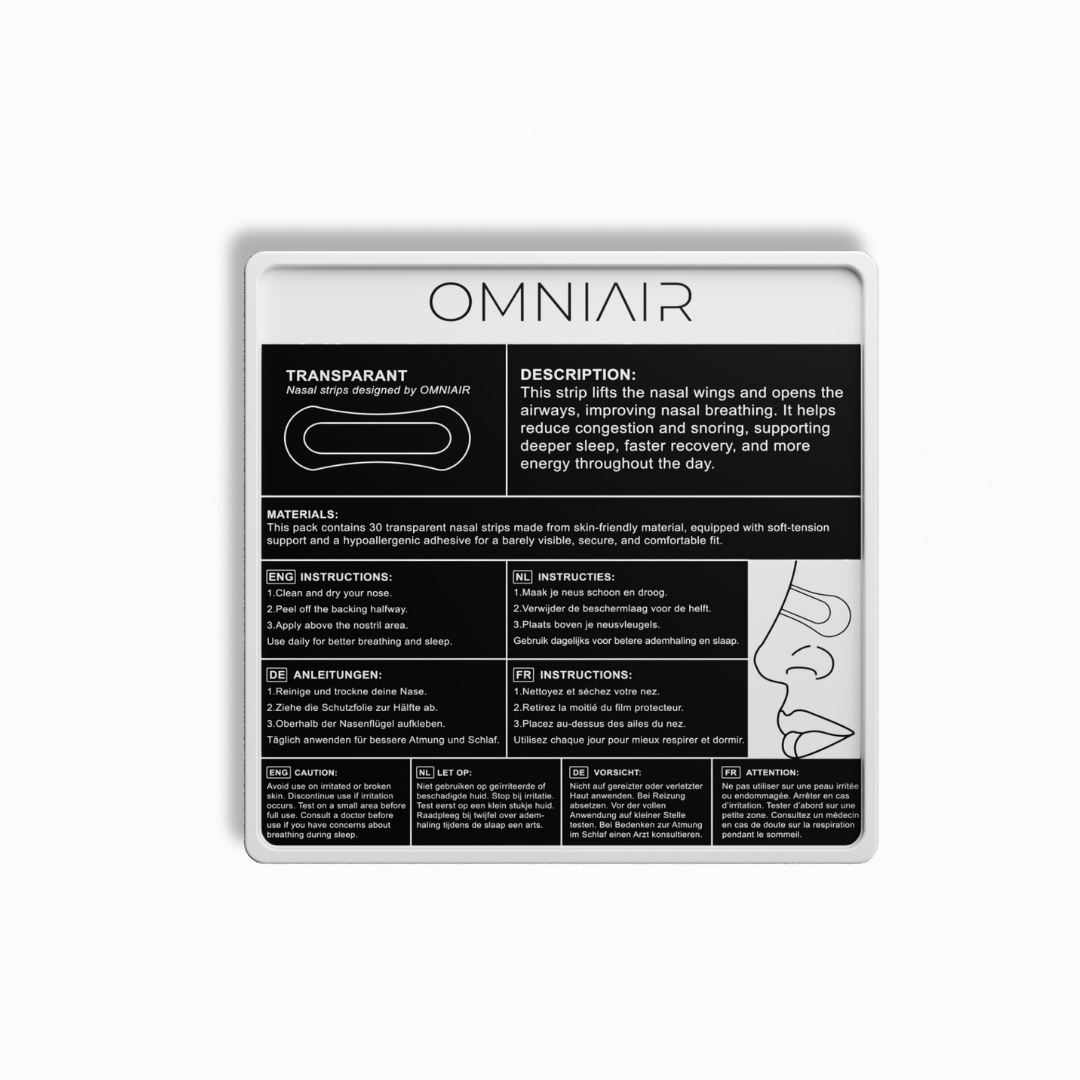
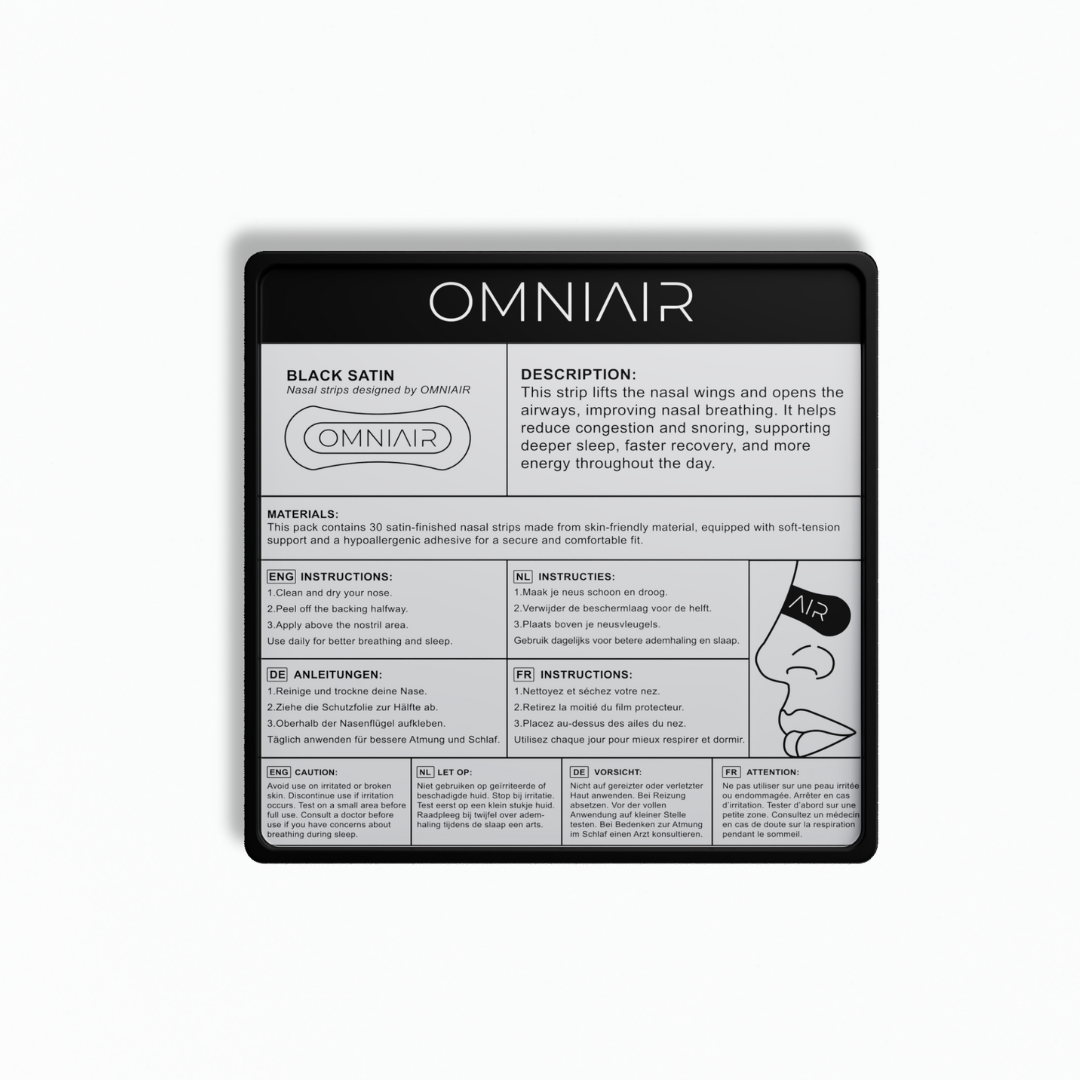
A clinical study by Roithmann and colleagues in The Laryngoscope measured exactly what a nasal strip does: it significantly increases the minimum cross-sectional area of the nasal valve and reduces airflow resistance. A 2000 study by Kirkness and colleagues in the European Respiratory Journal confirmed the mechanism: the springy bands stabilise the lateral nasal walls so they don't collapse during forceful inhalation.
Translation for runners: a nasal strip doesn't add anything to your physiology. It removes a mechanical barrier so you can use the nasal breathing you already have, for longer, under more cumulative load.
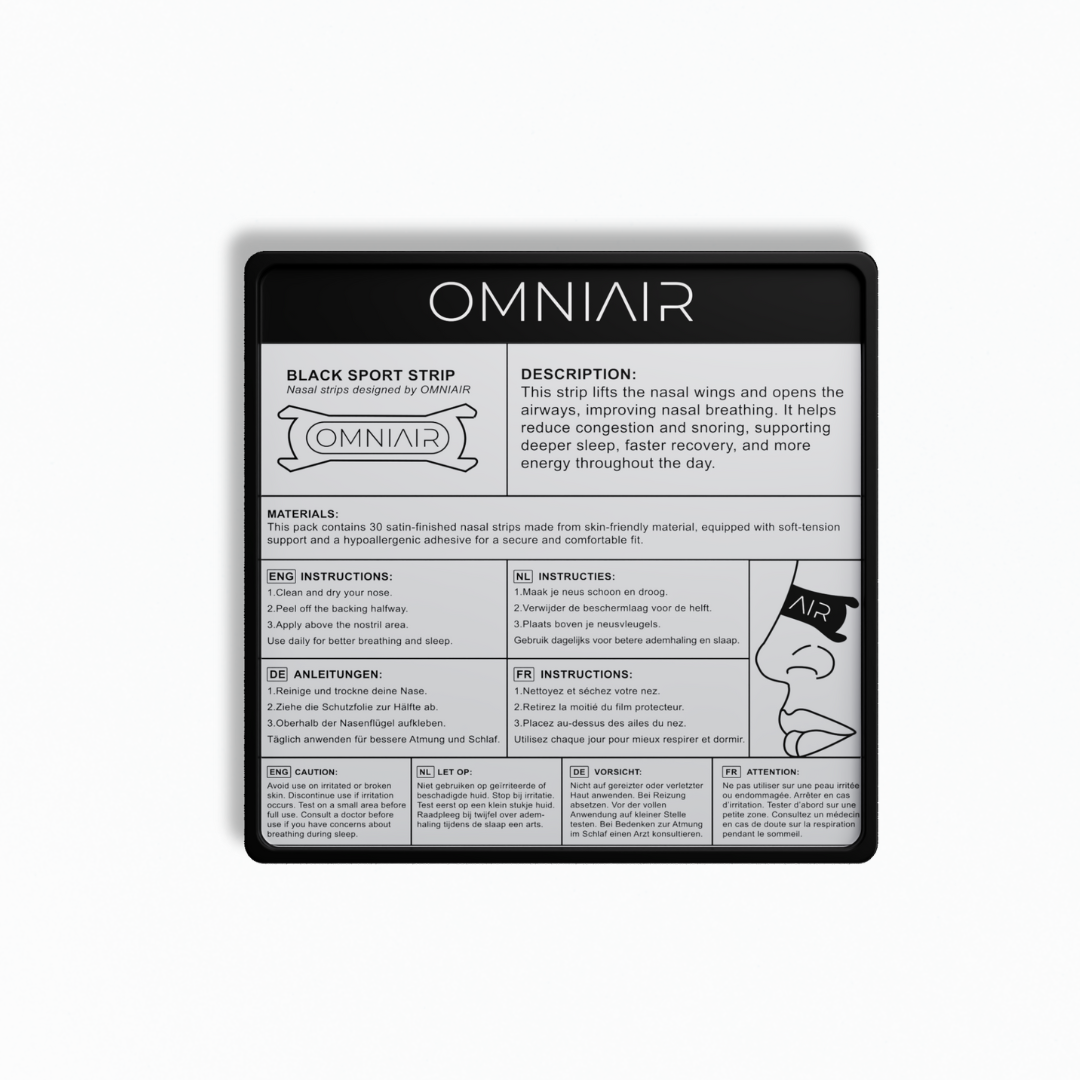
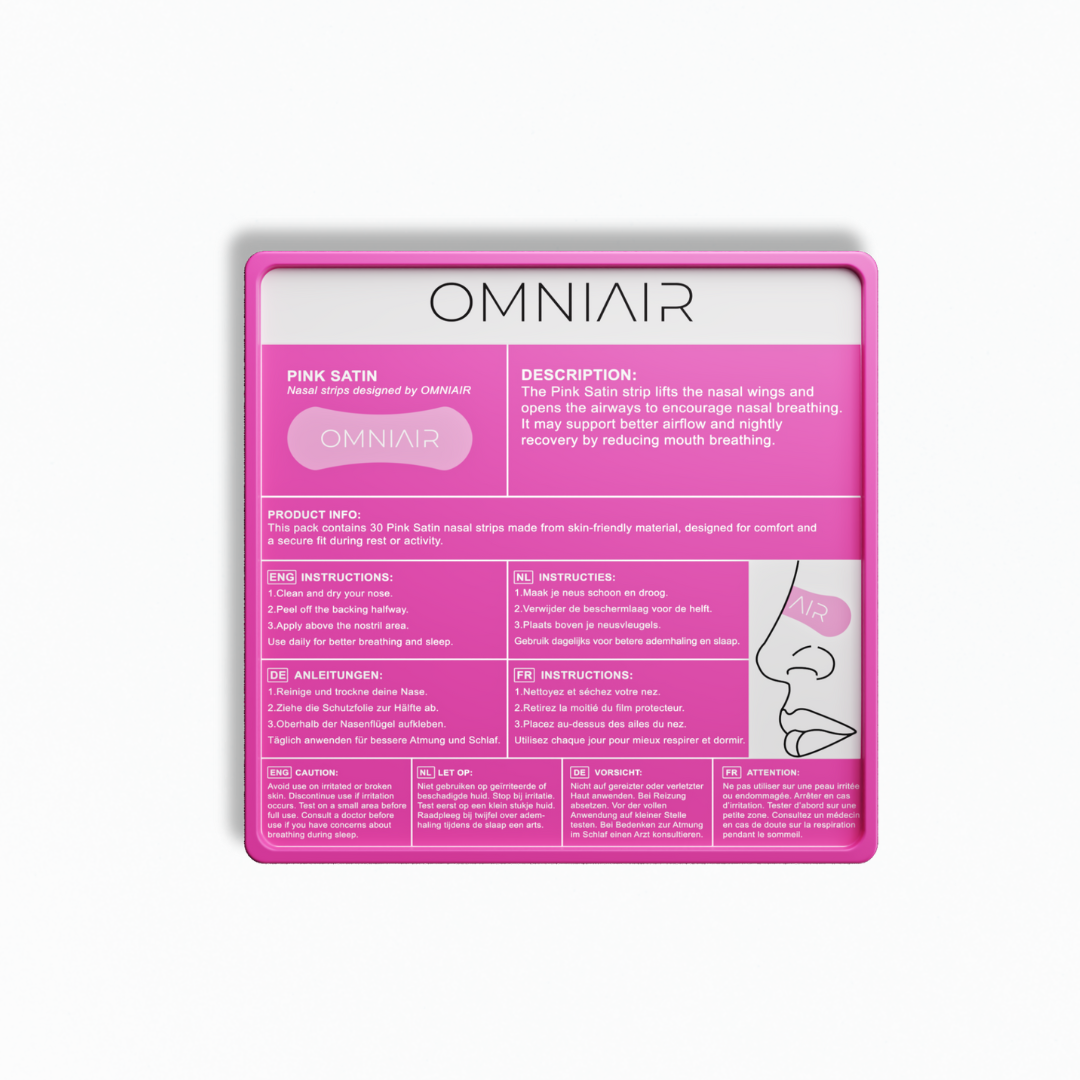
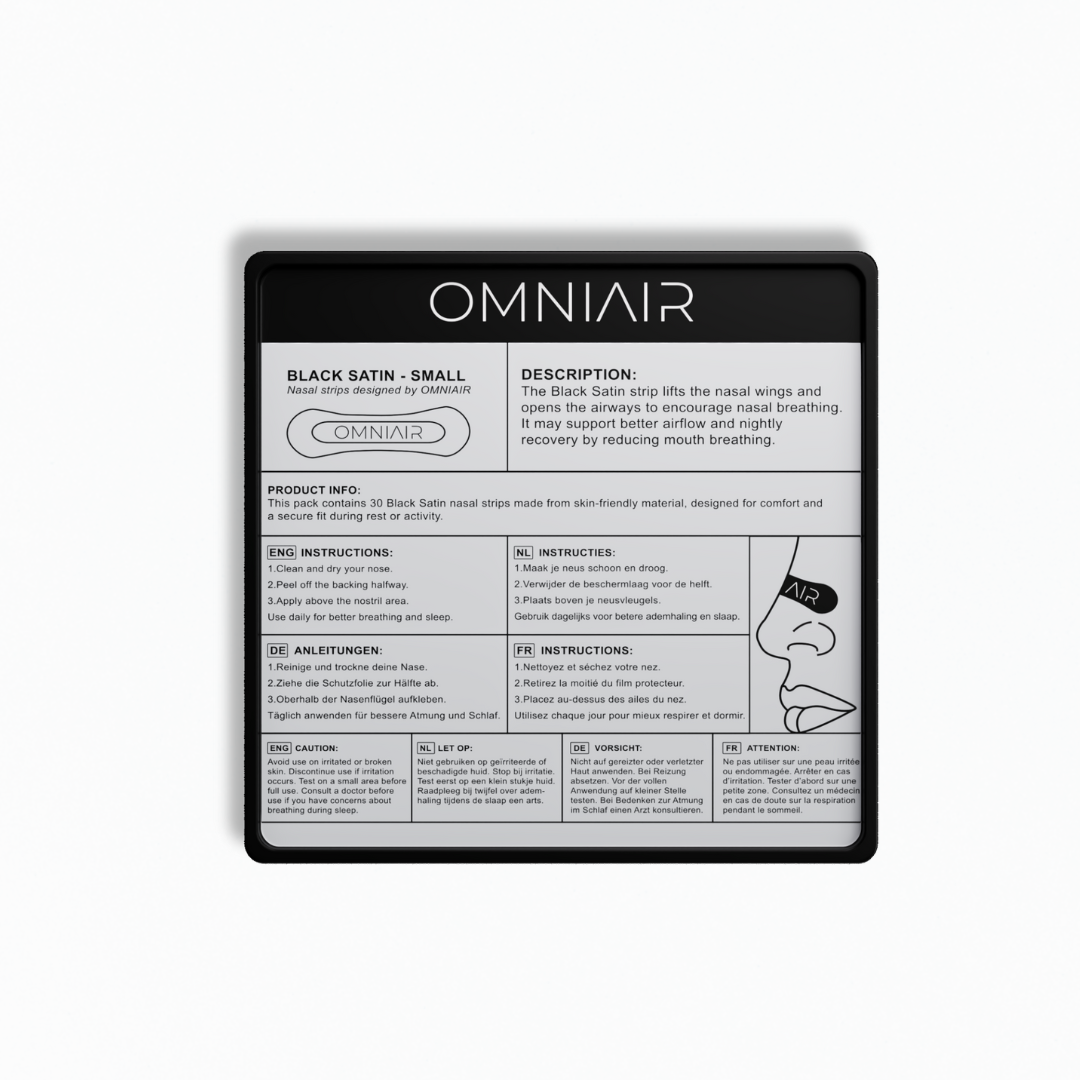
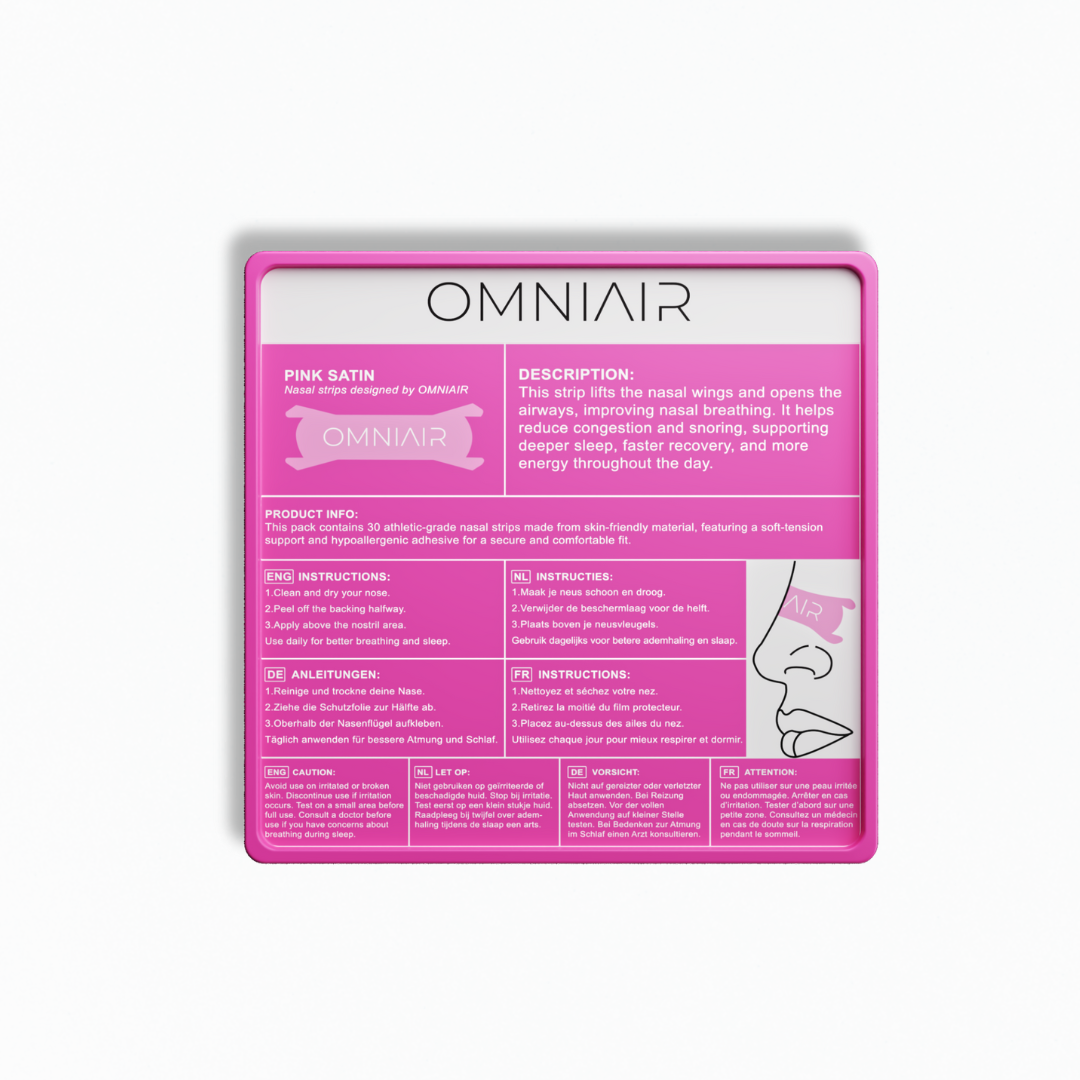
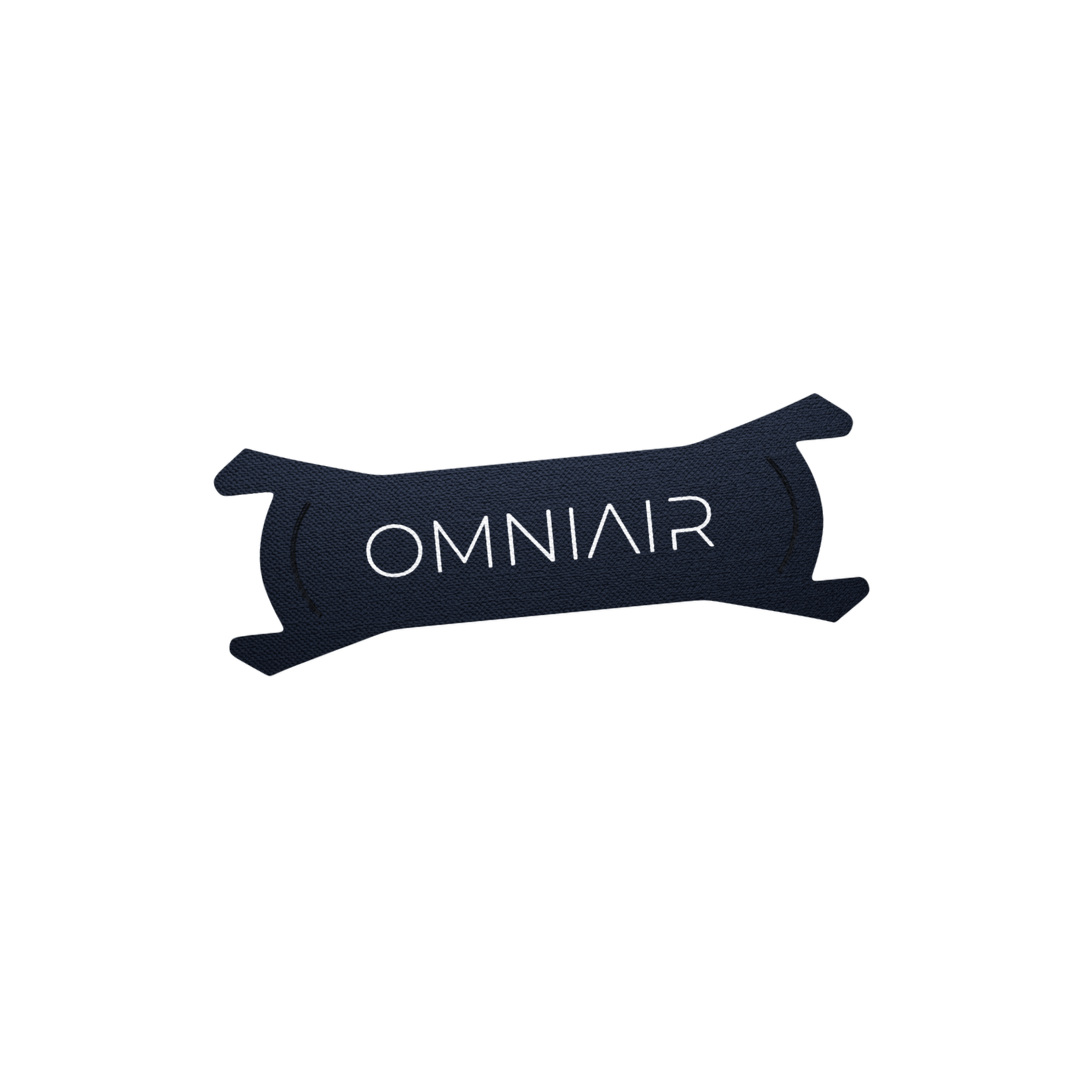
This is exactly the gap OMNIAIR is engineered to fill. Most nasal strips on the market were built for snorers, not athletes. They peel at the first sign of sweat. They press painfully against the bridge of your nose under sunglasses. They use stiff plastic that pulls skin on application and leaves residue on removal. Useless for a 3-hour long run, let alone a 6-hour ultra.
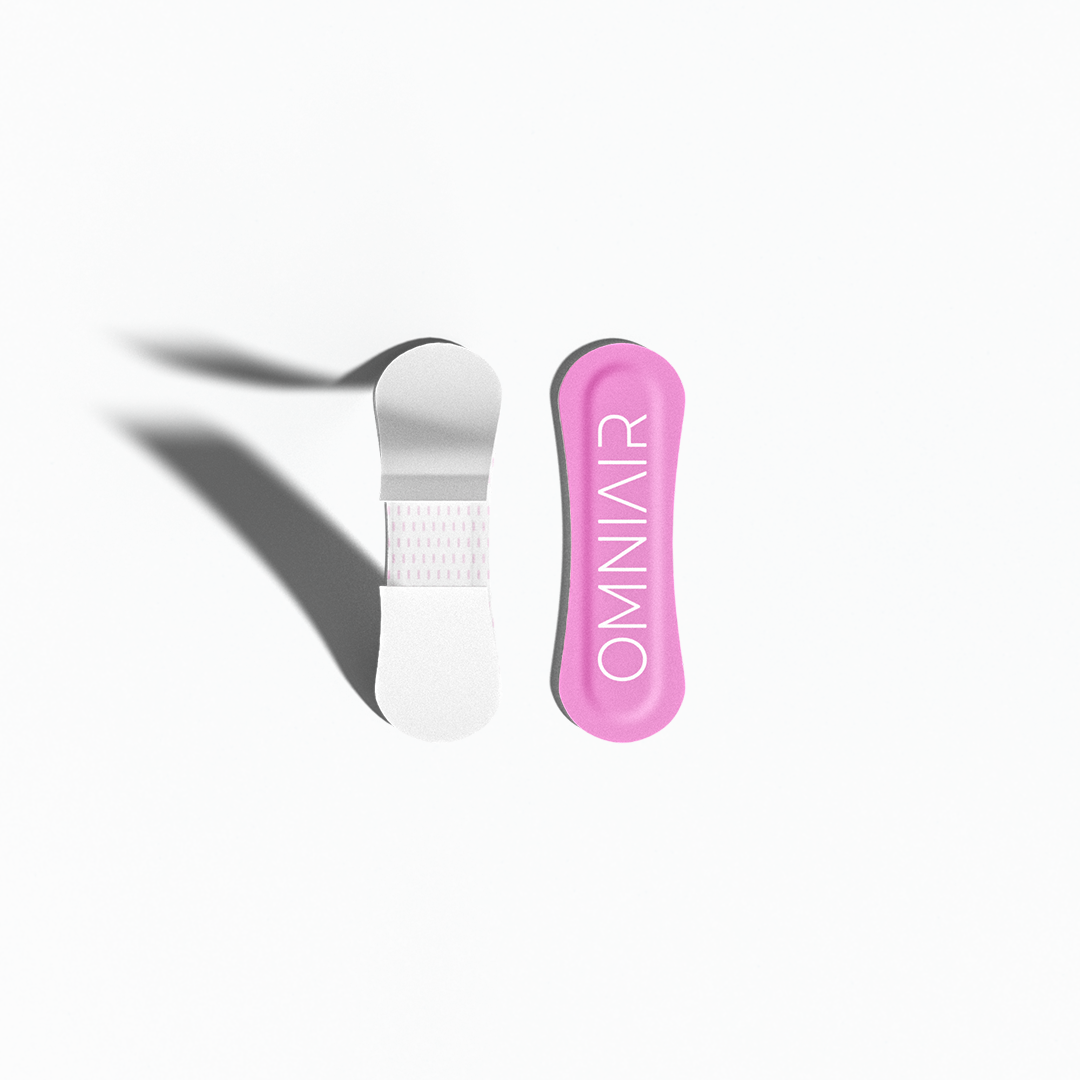
OMNIAIR is built specifically for athletes who need a strip to perform for the entire duration of an effort. Medical-grade adhesive that bonds to sweat-active skin. A spring-band system calibrated for the cross-sectional area of an adult athlete's nasal valve, not a generic average. A profile thin enough to disappear under sunglasses or a running cap. And a removal process that doesn't leave you raw for tomorrow's session.
Marathon: where the efficiency curve pays off
The marathon is the textbook case for nasal strip benefit. Three to five hours at 75-85% of max heart rate is exactly the zone where LaComb and Dallam found nasal breathing to be more efficient. It's also the duration where respiratory muscle fatigue and sympathetic dominance compound.
Practical reality: most marathon runners are already partial nasal breathers in the first half. The breakdown happens around kilometre 25-30, when fatigue forces a shift to dominant mouth breathing. That shift accelerates everything you don't want: faster respiratory rate, drier airways, higher perceived effort, sympathetic spiral.
A strip extends the kilometre at which that breakdown happens. It doesn't prevent it forever. But pushing the breakdown point from kilometre 25 to kilometre 32 can be the difference between hitting your target pace and falling apart in the final 10K.
Trail and ultra: where it matters even more
Trail running adds variables that hammer the nasal system specifically. Dust on dry trails. Pollen on forest paths. Cold, dry mountain air at altitude. Repeated changes in elevation that destabilise breathing rhythm. All of it constricts nasal airways at the exact moment you need them open.
Ultra distances stretch the autonomic argument even further. The difference between 6 hours and 12 hours of mouth breathing isn't twice the cost. It's exponentially worse. Heart rate drift, accumulated respiratory muscle fatigue, sympathetic exhaustion, all compound non-linearly.
For ultra runners, the case for nasal optimisation isn't subtle. It's one of the few interventions where the mechanism aligns directly with the demands of the event.
What a nasal strip does not do
Be realistic about what to expect.
- It won't raise your VO2max. Dinardi's meta-analysis is clear on this.
- It won't make you a faster 5K runner. At 95%+ VO2max, oral breathing dominates by necessity.
- It won't replace training. Nasal breathing adaptations come from months of consistent nasal-focused running, not from a strip on race day.
- It won't fix severe congestion. With significant cold or allergy symptoms, a strip helps marginally. Plan your race and your medication accordingly.
- It won't help during sprint finishes. The final kilometre kick is anaerobic, and oral breathing is correct there.
The value is in submaximal efficiency, autonomic regulation, and mechanical reliability over long duration. That's the entire pitch. It's enough.
How to test it for running
Treat nasal strips like any other piece of equipment: nothing new on race day. Test during your long run block, ideally in the 8 to 12 weeks before your target race. Use one on a 2.5-hour easy run. Use one on a tempo session. Use one on a back-to-back weekend if you're training for trail or ultra.
Pay attention to how your breathing pattern responds in the third hour, not the first. Some runners notice an immediate difference in airflow comfort. Others feel the benefit emerge gradually as the run goes long. A few feel nothing meaningful. Response varies by individual nasal anatomy and pre-existing nasal valve tendency to collapse.
One practical note for racing: apply the strip to clean, dry skin before sunscreen. Done correctly, an OMNIAIR strip is engineered to hold through multi-hour races, sweat, and weather. No mid-race re-application needed.
The OMNIAIR standard for runners
OMNIAIR isn't a hack. It's a precision-engineered tool for the runner who pays attention to the variables they can actually control. Every detail is built for hours of work, not five minutes of relief.
Engineered specifically for endurance:
- Maximum nasal valve opening. The spring-band tension is calibrated to lift the lateral nasal walls fully, opening the cross-sectional area without over-engineering pressure that would cause fatigue over hours.
- Built to last the entire race. Medical-grade adhesive bonds to sweat-active skin and holds through 6+ hours of sustained effort, rain, weather, and helmet or hat contact. No mid-race adjustments.
- Zero pressure on the nasal bridge. Critical when you're wearing sunglasses for the entire duration of a marathon. Most strips create a pressure point that becomes painful after hour two. OMNIAIR sits below that zone.
- Compatible with race-day prep. Works with sunscreen, race tattoos, vaseline, and skin tape. Apply to clean, dry skin first and the rest of your routine layers on without issue.
- Clean removal. Designed to peel cleanly without taking skin or leaving residue, so it doesn't compromise tomorrow's training session.
- Trusted by athletes, not snorers. Most strips on the market were designed for sleep. OMNIAIR was designed from the start for athletes who push their respiratory system to the limit.
This is what separates OMNIAIR from generic pharmacy strips: every design decision is made for the third hour, not the first ten minutes. It's a small thing. But in a sport where the difference between PB and a DNF is measured in the cumulative cost of every metabolic decision, small things compound over 42 kilometres.
The marathon isn't won at VO2max. It's held together by what happens at 75% of it, for hours. A nasal strip is a small mechanical fix in the system that does most of that work. Sometimes that's all the edge you need.
Sources
- Romer, L.M., & Polkey, M.I. (2008). Exercise-induced respiratory muscle fatigue: implications for performance. Journal of Applied Physiology, 104(3), 879-888. https://journals.physiology.org/doi/full/10.1152/japplphysiol.01157.2007
- LaComb, C., et al. (2017). Oral versus Nasal Breathing during Moderate to High Intensity Submaximal Aerobic Exercise. International Journal of Kinesiology and Sports Science, 5(1). https://journals.aiac.org.au/index.php/IJKSS/article/view/3079
- Dallam, G.M., et al. (2018). Effect of Nasal Versus Oral Breathing on VO2max and Physiological Economy in Recreational Runners. International Journal of Kinesiology and Sports Science, 6(2), 22-29. https://journals.aiac.org.au/index.php/IJKSS/article/view/4400
- Dinardi, R.R., et al. (2021). External nasal dilators do not improve maximal oxygen uptake during aerobic exercise: A systematic review and meta-analysis. https://pubmed.ncbi.nlm.nih.gov/34286410/
- Zaccaro, A., et al. (2018). How Breath-Control Can Change Your Life: A Systematic Review on Psycho-Physiological Correlates of Slow Breathing. Frontiers in Human Neuroscience, 12, 353. https://doi.org/10.3389/fnhum.2018.00353
- Amirsadri, A., & Sedighi, S. (2026). The physiological and psychological effects of nasal breathing: A narrative review of 70 studies. Behavioral Sciences. https://doi.org/10.3390/bs16030467
- Roithmann, R., et al. (1998). Effects of external nasal dilator strips on nasal patency: acoustic rhinometry measurements. The Laryngoscope. https://pubmed.ncbi.nlm.nih.gov/9628502/
- Kirkness, J.P., et al. (2000). Mechanical action of external nasal dilator strips on the upper airway. European Respiratory Journal, 15(5), 929-936. https://erj.ersjournals.com/content/15/5/929

Ready to upgrade your recovery?
Science-backed tools, built for athletes who take recovery seriously.
Shop OMNIAIR